

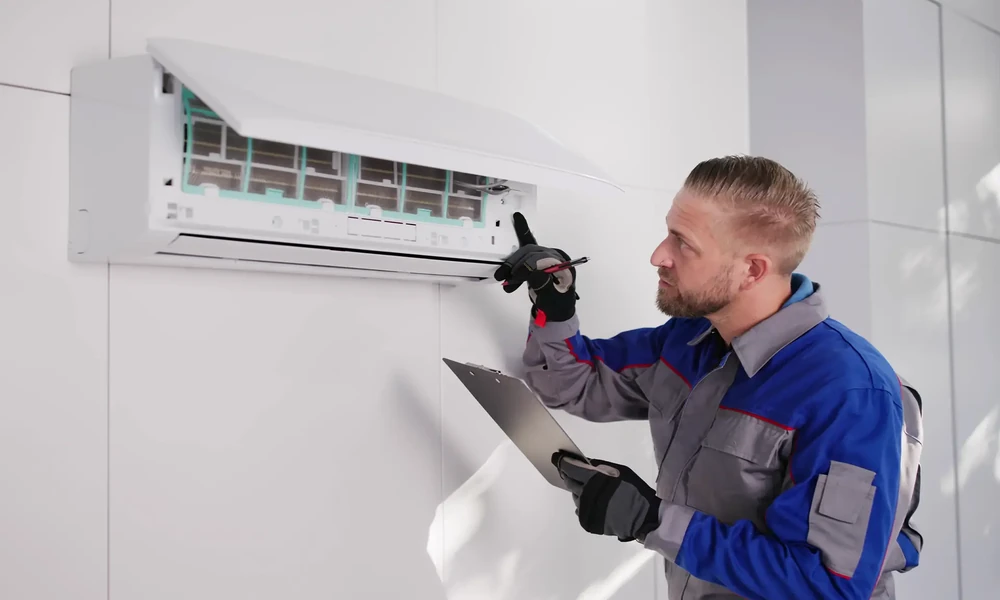
Most people picture a new air conditioner as a big metal box that arrives on a truck and gets plugged in. The reality is closer to a construction project with a precision finish. The quality of the result depends on dozens of small decisions, many of them made long before the crew shows up and many of them invisible once the work is done.
If you’re planning a Griffin hvac installation, this walkthrough takes you through installation day, stop by stop, so you know what to expect and what to ask. Start with the decision that comes before any equipment moves.
Before the Crew Arrives: The Size Decision
The most important choice is the size of the system, and bigger isn’t better. In a hot, humid climate like Georgia’s, that’s more than a comfort issue.
The EPA’s page on controlling moisture in your home points out that moisture problems differ by region and describes the South as hot and wet. It explains that in hot regions, air conditioners that cool the air too quickly may not run long enough to remove excess moisture. The same page recommends using dehumidifiers and air conditioners in hot, humid climates to reduce moisture in the air, while making sure the appliances themselves don’t become sources of biological pollutants.
In plain terms, an oversized system can cool the air quickly, shut off, and leave behind clammy, damp air. That is why a good installer starts with a load calculation for your specific home, not a rule of thumb based on square footage. Ask what factors go into it, such as insulation, windows, sun exposure, air leakage and ductwork.
Stop One: The Outdoor Unit
The first stop is outside, where the condenser sits on a pad.
What to expect: A level, stable pad, proper clearances on all sides, and refrigerant lines run neatly and insulated where needed.
What to ask: Is the unit placed where air can move freely around it? Will shrubs, fences or dryer vents interfere with airflow?
Stop Two: The Indoor Unit
Next is the air handler or furnace, usually in a closet, attic, crawlspace or garage.
What to expect: Secure mounting, a clean connection to the ductwork, and a condensate drain that slopes properly. The EPA notes that appliances like air conditioners shouldn’t become sources of biological pollutants, so a clear, working drain matters.
What to ask: Where does the condensate drain go? Is there a safety shutoff in case it clogs?
Stop Three: The Ducts
Ducts are the part of the system you almost never see, and one of the places comfort is won or lost.
What to expect: Connections that are sealed, not just taped, and ducts that are insulated where they pass through unconditioned space.
What to ask: Will the existing ducts be inspected, repaired or replaced? A new system connected to leaky or undersized ducts won’t perform to its potential.
Stop Four: Moisture Away From the System
The EPA’s guidance includes a few related moisture rules worth knowing before your new system goes in:
- Use exhaust fans in bathrooms and kitchens to remove moisture to the outside, not into the attic.
- Vent the clothes dryer to the outside.
- Fix leaks and seepage promptly.
- Be aware that a tight, energy-efficient house holds more moisture inside, so ventilation matters more.
A new, more efficient system is a good moment to check that these basics are working.
Stop Five: The Thermostat
What to expect: A properly wired thermostat set up for your system, with a walkthrough of how to use it.
What to ask: If you’re getting a smart thermostat, what does it control, and can you set humidity targets or schedules?
If humidity is a concern, ask about options like whole-home dehumidification. My Comfort Team lists dehumidifiers, humidifiers, advanced filtration and UV lights among its indoor air quality options.
Before They Leave: The Handoff Checklist
A good installation finishes with proof, not just a clean workspace. Before the crew leaves, ask to see or confirm:
- System startup and testing, including airflow, temperatures and refrigerant charge
- Drain flow, with water confirmed moving where it should
- Thermostat operation in both heating and cooling
- Permit and inspection details, if your area requires them
- Warranty registration and the paperwork you’ll need to keep
- Maintenance guidance, including filter size and replacement schedule
What to Watch in the First Few Weeks
After installation, pay attention to how the house feels, not just the temperature on the thermostat.
- Clammy air with the AC running can suggest the system isn’t running long enough to remove moisture.
- Condensation on windows can point to excess indoor humidity, which the EPA notes can build up in tight, efficient homes.
- Rooms that never match the others can mean a duct or airflow issue worth reporting.
- A musty smell is a reason to call and check the drain and coil.
If anything seems off, tell the contractor early. Many issues are easy to adjust.
Working With a Local Installer
My Comfort Team, a woman-owned HVAC company in Griffin, installs high-efficiency central systems, ductless mini-splits, smart thermostats and water heaters, and serves Spalding County and surrounding counties in the South Metro Atlanta area. Its Georgia license number, CN211150, is listed on its website, and it offers financing for qualified customers. At the time of writing, its site also advertises a fall promotion that includes a free furnace with a qualifying new air conditioner purchase through October 31, 2026. You can reach the team at 678-994-6011.
The Takeaway
A great installation isn’t about the biggest box or the fastest crew. It’s about the right size, clean connections, sealed ducts and a working handoff. In a hot, wet climate, the right-sized system also keeps your home from feeling cool but damp. Ask about the calculation, watch the details, and you’ll get a system that feels as good as it looks.
