

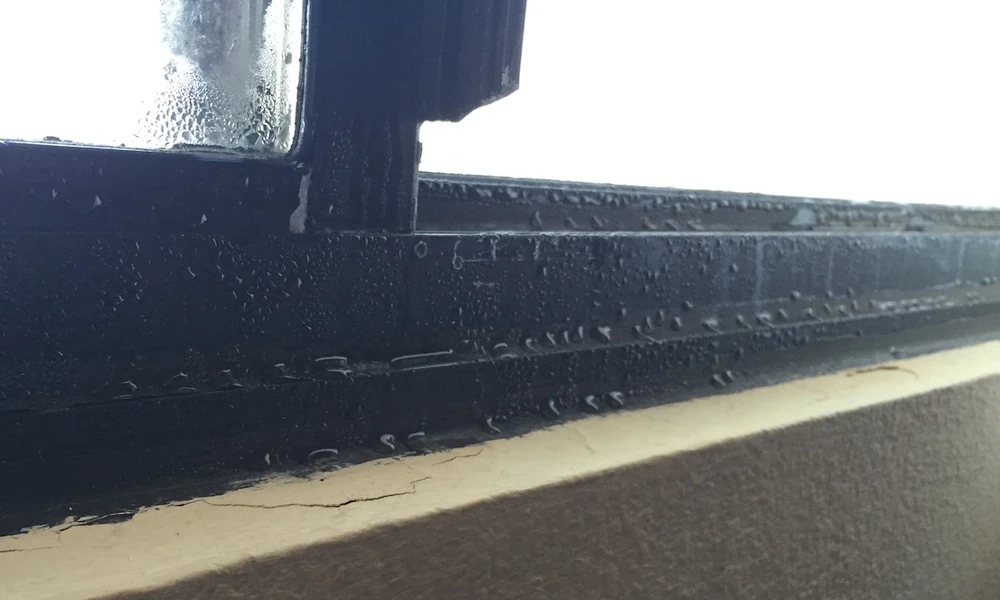
Late summer is when central air conditioners in Somerset County tend to reveal their weak spots. Months of long runtimes, heavy condensate and afternoon storms stack up, and parts that limped through June finally quit in August. The good news is that most failures announce themselves with a recognizable sign well before the system stops cooling altogether.
Before calling anyone, four quick checks rule out the simplest causes. Confirm the thermostat fan is set to “Auto,” look at the filter, make sure every supply register and return grille is open, and check whether the breaker or outdoor disconnect has tripped. A $15 hygrometer placed in a central room adds the most useful clue of all, because so many summer complaints turn out to be about moisture rather than temperature.
Homes that depend on air conditioning also share some built-in challenges. Many are two story layouts with upstairs ducts running through hot attics, basements that stay damp all summer, and returns sized for equipment installed decades ago. Each section below names what you notice, what usually sits behind it and what actually fixes it.
Some of these symptoms end with a part replacement, and some end with a bigger question about ductwork or the age of the equipment. Homeowners looking for Air Conditioning in Basking Ridge can get both answered by one local team that handles AC repairs, duct modifications and full system installation, which makes it easier to decide whether to fix the current unit or plan its replacement. A short email to georgedaus@gmail.com describing the symptom is enough to get a visit on the calendar.
Indoor Humidity Won’t Drop Below 60 Percent
What you notice: Rooms feel cool but damp, the hygrometer sits in the 60s, and wood floors or doors feel sticky.
What’s behind it: The EPA advises keeping indoor humidity below 60 percent, ideally between 30 and 50, and an oversized system struggles to get there. It reaches the setpoint so quickly that the coil never stays cold long enough to drain moisture. Blower speeds set too high and a fan left running between cycles make the problem worse.
What fixes it: A technician can slow the blower or turn on a dehumidify setting if the equipment supports it. When the system is simply too big, a whole home dehumidifier closes the gap until replacement time, when right sizing solves it for good.
Warm Air Comes Out While the Outdoor Fan Sits Still
What you notice: The condenser hums, its fan barely moves, and the vents blow room temperature air.
What’s behind it: A failed run capacitor is the most common cause, and summer storms often finish off weakened ones. Rutgers’ state climate office described August 2026 as warm, wet and severe, with more hours of dew points at or above 75°F than any August since 2012 and a damaging squall line across the northern half of the state. Heat, long runtimes and voltage surges all shorten capacitor life.
What fixes it: Kill power at the disconnect and breaker and leave the panel closed, because capacitors store a dangerous charge. A technician tests and replaces the capacitor or a pitted contactor, and a surge protector at the disconnect is a sensible add-on.
The System Starts and Stops Every Few Minutes
What you notice: Short bursts of cooling, frequent clicks at the thermostat, and humidity that never improves.
What’s behind it: Oversizing again, or a thermostat sitting in a draft from a nearby supply register or in direct afternoon sun. Low refrigerant and an overheating compressor can trigger safety shutoffs that look the same.
What fixes it: Relocating or shielding the thermostat is cheap and often decisive. If cycling continues, a technician should check charge, pressures and compressor amperage before parts start getting swapped.
Frost Builds on the Large Copper Line
What you notice: Ice on the insulated line outside or at the indoor coil, followed by weak airflow and puddles.
What’s behind it: Restricted airflow from a clogged filter, a dirty coil or a struggling blower, or low refrigerant from a leak.
What fixes it: Turn cooling off for several hours to thaw the coil, then replace the filter. Ice that returns with clean airflow means a leak that needs locating and sealing. Repeated recharges of an older R‑410A system get more expensive each season as supply tightens.
The System Shuts Off and Water Appears Nearby
What you notice: The unit stops without warning, or a stain grows on the ceiling below an attic air handler.
What’s behind it: A condensate line clogged with algae, which trips the float switch. Muggy weeks send several gallons a day through that line.
What fixes it: Clear the line at its access tee or vacuum it from the outdoor end. A technician should check slope, trap, the secondary pan and any basement condensate pump.
Registers Whistle and Upstairs Rooms Stay Warm
What you notice: Noisy grilles, a loud blower and bedrooms several degrees warmer than the first floor.
What’s behind it: Undersized or too few returns, leaky attic ducts gaining heat, and sometimes a dense one inch filter choking airflow.
What fixes it: Adding or enlarging returns, sealing and insulating attic runs, and balancing dampers. A deeper media filter cabinet keeps filtration without strangling the blower, and zoning helps layouts that duct changes alone cannot fix.
When a Repair Stops Making Sense
A single capacitor or clogged drain is routine maintenance territory. The math changes when an older system needs a refrigerant leak repair, a compressor, or a new indoor coil, especially if it was oversized from the start and has never controlled humidity well. In that situation, putting the repair estimate next to the cost of a correctly sized replacement, with duct corrections included, usually gives a clearer answer than the repair bill alone.

Tereso Sobo is an interior and home living writer who focuses on residential décor, renovation inspiration, and functional design ideas. He shares practical approaches to creating stylish and comfortable living spaces.
