

Elevating Residential Spaces: From Architecture to Custom BuildsThe Evolution of Modern Home Construction and Design
Building a home is a deeply personal journey. It is about creating a space that perfectly fits your unique dreams and lifestyle. This significant undertaking involves many important decisions. From the first sketch to the final move-in day, each step shapes your future living environment.
We understand that navigating custom home construction and design can seem complex. That is why we have created this extensive guide. We aim to simplify the process for you. We will cover everything you need to know. This includes choosing the right professionals and managing your budget. We will also explore how modern technology enhances the building experience.
Our guide will help you understand the core differences between custom builders and pre-designed plans. We will show you how to select a reliable design firm or builder. We will also detail the step-by-step process of designing and building. This includes everything from initial consultations to final inspections. If you are interested in understanding the detailed journey of how a custom home is built, we provide clear insights. We will also discuss budgeting, contingency planning, and what warranties to expect. Our goal is to empower you with the knowledge needed to build your dream home with confidence.
The landscape of home construction and design has continuously evolved, offering homeowners a spectrum of choices from highly personalized custom builds to efficient pre-designed plans. Understanding these options is the first step toward realizing your vision.
At its heart, custom home construction involves tailoring every aspect of a home to the owner’s specific needs, preferences, and the unique characteristics of their chosen site. This approach offers unparalleled flexibility in layout, materials, and architectural style. When you engage a custom home builder, you are embarking on a collaborative journey where your input is central to every decision. This often involves working closely with architects and designers from the ground up, ensuring the final product is a true reflection of your lifestyle. For those seeking a truly unique and personalized living space, a custom build is often the preferred route.
Alternatively, pre-designed house plans, readily available from platforms like Houseplans.com, offer a different set of advantages. With nearly 40,000 floor plans in its database, Houseplans.com provides a vast selection of ready-to-build designs. These plans can be a more time-efficient and often more budget-friendly option, as the design work is already completed. While they offer less initial customization than a fully custom build, many pre-designed plans can be modified to fit specific lot sizes or personal preferences. This allows for a balance between cost-effectiveness and a degree of personalization.
The choice between a custom home builder and pre-designed plans largely depends on your priorities regarding budget, timeline, and the level of personalization desired. A custom builder provides a bespoke experience, integrating your vision into every detail. In contrast, pre-designed plans offer a quicker start and a more predictable cost, with options for minor adjustments. For a deeper dive into the mechanics of creating a personalized dwelling, exploring resources on Residential design and build can provide valuable insights into how professionals translate ideas into blueprints.
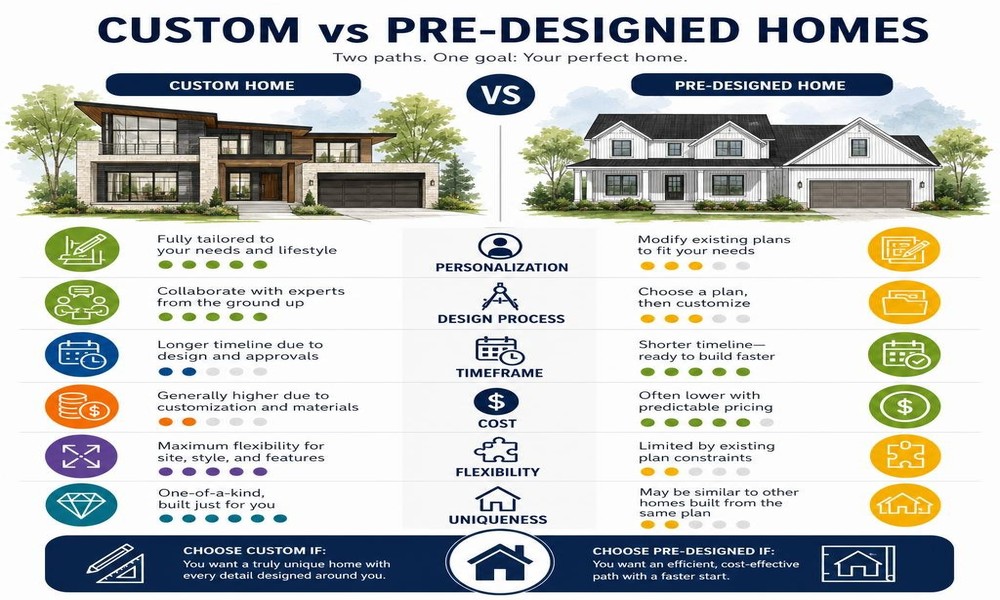
Here’s a comparison to help illustrate the differences:
Feature Custom Home Builder Pre-Designed House Plans (e.g., Houseplans.com) Personalization High: Every detail tailored to owner’s specifications Moderate: Plans can be modified, but core design is fixed Design Process Collaborative with architects/designers from scratch Select from existing database, then customize as needed Timeframe Longer, due to extensive design and approval phases Shorter, as primary design is complete Cost Generally higher, reflecting unique design and materials Often lower, as design costs are amortized across multiple sales Flexibility Maximum flexibility for site, style, and features Limited by existing architectural constraints Uniqueness One-of-a-kind home May be similar to other homes built from the same plan Regardless of the path you choose, understanding Custom room construction design will provide a comprehensive overview of the entire process, from initial concept to final construction.
This infographic illustrates the key differences between custom-built homes and those constructed using pre-designed plans, highlighting aspects like personalization, cost, and design flexibility.
The Step-by-Step Custom Build Process
Building a new custom home is an intricate process that unfolds in a series of well-defined stages, each crucial to the successful realization of your dream. From the initial spark of an idea to the moment you turn the key, a structured approach ensures clarity and efficiency.
The journey typically begins with an initial consultation. This is where you articulate your vision, needs, and desires for your new home. It’s a critical phase for establishing a strong rapport with your potential builder or design firm. Discussions will cover everything from desired architectural styles and functional requirements to preliminary budget expectations and timeline goals.
Following the initial discussion, site evaluation and selection become paramount. If you haven’t already secured land, your builder or architect can assist in assessing potential properties. This involves evaluating factors such as topography, soil conditions, access to utilities, zoning regulations, and how the home will be oriented to maximize natural light and views. Understanding How to Buy Land and Build a House is essential at this stage, as the land itself significantly influences design and construction costs.
Once the site is chosen, the design phase commences. This involves:
- Conceptual Design: Architects translate your ideas into preliminary sketches and floor plans, exploring different layouts and aesthetic directions.
- Architectural Design Development: These concepts are refined, incorporating detailed structural elements, exterior elevations, and material considerations. This often includes 3D renderings and virtual walkthroughs to help you visualize the space.
- Construction Documents: Comprehensive blueprints and specifications are created, outlining every detail necessary for construction. These documents are vital for obtaining permits and guiding the build.
With designs finalized and permits secured, the pre-construction phase involves detailed planning, scheduling, and subcontractor selection. Then, the construction phase begins in earnest:
- Site Preparation and Foundation: The land is cleared, graded, and the foundation is laid. This is a foundational step, quite literally, ensuring the stability and integrity of the entire structure.
- Framing: The skeleton of your home takes shape, defining rooms and spaces.
- Rough-Ins: Electrical, plumbing, and HVAC systems are installed within the walls, ceilings, and floors.
- Exterior Finishes: Roofing, siding, windows, and doors are installed, making the home weather-tight.
- Interior Finishes: Drywall, flooring, cabinetry, paint, and fixtures are added, bringing the interior spaces to life.
- Landscaping and Exterior Details: Final grading, driveways, walkways, and landscaping complete the home’s exterior appeal.
A construction crew meticulously pours concrete for a new home’s foundation, a critical early step in the building process.
Throughout these stages, regular communication with your builder and design team is key. The process culminates in a final walkthrough and inspection, ensuring everything meets your expectations and quality standards before move-in. For homeowners in Massachusetts, understanding the specific Steps to Building a House in Massachusetts can provide valuable local context and regulatory insights. The entire process, from design through move-in, typically spans 10-14 months, though this can vary based on complexity, site conditions, and material availability. For more detailed information on project durations, you can consult resources like How Long Does It Take to Build a Custom Home?.
Collaborative Roles in Home Construction and Design
A successful custom home project is a symphony of collaboration, with distinct professionals playing vital roles within the design-build process. Understanding how these roles integrate is key to a smooth and efficient project.
The architect is often the visionary, responsible for the overall aesthetic, structural integrity, and functional layout of your home. They translate your ideas and lifestyle into detailed blueprints, ensuring the design adheres to building codes and maximizes the potential of your site. Their expertise is crucial in shaping the form and flow of the living spaces. For examples of innovative architectural approaches, exploring Custom Home Designs in Washington can offer inspiration.
The interior designer focuses on the aesthetics and functionality of the interior spaces. They work closely with you to select finishes, fixtures, color palettes, and materials that reflect your personal style while ensuring cohesion and practicality. From cabinetry and countertops to lighting and flooring, their role is to create inviting and harmonious interiors. Some firms, like those specializing in House Design, Hampton Falls, NH, offer integrated architectural and interior design services, fostering seamless collaboration.
The builder, or general contractor, is the project manager and executor. They are responsible for overseeing the entire construction process, managing subcontractors, ensuring quality control, adhering to the schedule, and managing the budget. In a design-build model, the builder works hand-in-hand with the architect and interior designer from the project’s inception. This integrated approach helps align design aspirations with construction realities and budgetary constraints from day one, minimizing potential disconnects and change orders later in the process. This collaborative synergy is a hallmark of an efficient and client-focused design-build firm.
Selecting Materials and Leveraging Modern Technology
The selection of finishes and materials is where your custom home truly begins to reflect your personal style. This process, often facilitated through design centers and enhanced by modern technology, is both exciting and crucial.
Design centers and selection meetings are typically structured to guide you through the vast array of choices available. Many reputable builders and design firms operate in-house design centers, or partner with showrooms, where you can see, touch, and compare various options for flooring, cabinetry, countertops, plumbing fixtures, lighting, paint colors, and more. During selection meetings, a dedicated design specialist or interior designer will walk you through the options, helping you make informed decisions that align with your aesthetic preferences, functional needs, and budget. For instance, a Home Design Center might streamline the process into a series of focused meetings, ensuring all decisions are made methodically. Homeowners should expect these meetings to be collaborative, detailed, and sometimes intense, given the sheer number of decisions. It’s advisable to come prepared with inspiration images and a clear understanding of your “must-haves” versus “nice-to-haves.” Some innovative approaches even offer curated selection packages, often referred to as “Build Recipes,” which provide pre-selected, cohesive design schemes to simplify decision-making.
Modern tools and technology have revolutionized the custom home building experience, making the design and selection process more immersive and less daunting.
- 3D Renderings: These sophisticated visual representations bring your home design to life long before construction begins. They allow you to see how different materials, colors, and lighting will look in your space.
- Virtual Walkthroughs: Taking 3D renderings a step further, virtual walkthroughs allow you to “move” through your future home using VR or interactive software. This immersive experience helps you understand the scale, flow, and feel of each room, identifying potential adjustments before they become costly changes during construction.
- Project Management Software: Many builders now use platforms like Buildertrend or Materio, which provide homeowners with real-time updates on construction progress, schedules, budgets, and selection approvals. This transparency fosters better communication and allows you to stay informed every step of the way.
These technological advancements not only improve communication and reduce misunderstandings but also empower homeowners to make more confident design decisions, ensuring the final product truly matches their vision.
A person uses virtual reality goggles to experience a virtual walkthrough of their future home design, showcasing modern design visualization technology.
Budgeting, Contingencies, and Financial Planning
Effective financial planning is the bedrock of a successful custom home build. Without a clear understanding of costs and a robust budgeting strategy, even the most exciting projects can encounter significant hurdles.
The cost of building a custom home is influenced by numerous factors, including the size and complexity of the design, the quality of materials and finishes selected, the chosen location, and current market conditions. It’s crucial to obtain a detailed, itemized estimate from your builder that breaks down expenses for each phase of construction, from site work and foundation to framing, mechanical systems, and interior finishes. For a comprehensive understanding of these factors, resources like How Much Does It Cost to Build a Custom Home? can be incredibly helpful. Additionally, for localized insights, you might explore guides such as The Ultimate Guide to How Much It Costs to Build a Custom Home in Andover.

A critical component of any custom home budget is the contingency fund. This is an allocated sum, typically 10-15% of the total project cost, set aside to cover unforeseen expenses or desired changes during construction. Even with meticulous planning, unexpected site conditions, material price fluctuations, or minor design modifications can arise. A well-managed contingency fund prevents these surprises from derailing your project or causing financial stress.
Change orders are formal documents that detail any modifications to the original scope of work, budget, or timeline. These can be initiated by the homeowner or the builder and should always be approved in writing before any work commences. While custom builds offer flexibility, frequent or significant change orders can lead to budget overruns and project delays. Transparent communication with your builder about the cost implications of any proposed changes is vital for maintaining financial control. Understanding The Top Five Factors That Influence the Cost to Build a House can further equip you to manage these financial aspects effectively.
Reputable companies, such as New Home Design & Construction, with 27 years of experience, have successfully completed projects ranging from smaller renovations to extensive custom homes, demonstrating the wide financial scope possible in residential construction. This breadth of experience highlights the importance of matching your project’s ambition with a builder’s proven capability. When considering the scope of your project, the quality of materials and the complexity of the design will significantly impact the overall investment, whether you’re planning a traditional build or a specialized Skydeck home construction.
Evaluating Builders and Ensuring Long-Term Value
Choosing the right builder or design firm is arguably the most critical decision in your custom home journey. Their expertise, reliability, and commitment to quality will directly impact the success and enjoyment of your new home.
When selecting a professional for a high-end custom home project, consider these factors:
- Experience and Specialization: Look for firms with a proven track record in custom home construction, especially those with experience in the style and scale of home you envision. For instance, ICI Homes, a leading builder in Florida, has been ranked in the Top 100 Home Builders in the country for over a decade, having built thousands of homes over forty years. This demonstrates significant experience and capacity.
- Reputation and References: Beyond online reviews, ask for references from past clients and speak with them directly. Inquire about their experience with communication, project management, quality of work, and post-construction support. Sites like Houzz can also provide valuable insights into a builder’s reputation and project portfolio, such as the work by Lewis Builders Development, Inc..
- Licensing and Insurance: Verify that the builder is properly licensed and insured in your state or region. This protects you from potential liabilities and ensures they meet professional standards. Living Home, for example, has been fully licensed and insured since its founding in 2007, completing hundreds of projects, which speaks to their commitment to professional standards.
- Communication Style: A good builder will maintain open, transparent communication throughout the project, keeping you informed of progress, challenges, and decisions.
Ensuring your custom home design balances personal style with long-term resale value requires thoughtful consideration during the design phase. While your home should reflect your unique tastes, incorporating timeless design elements and flexible layouts can enhance its appeal to future buyers. For example, open-concept living spaces, versatile bonus rooms, and high-quality, durable materials tend to hold their value well. Avoiding overly niche or trendy design choices that might quickly become dated is also wise. Consulting with experienced Andover MA Builders can provide local market insights on what features contribute most to resale value in your area. The goal is to create a home that you adore, but that also represents a sound investment. For those considering specialized features, a Custom room construction design can offer both unique appeal and functional value.
Finally, understanding warranties and post-construction support is crucial. Reputable builders typically offer a comprehensive warranty package. This often includes:
- 1-Year Craftsmanship Warranty: Covers defects in workmanship and materials.
- 2-Year Systems Warranty: Covers defects in plumbing, electrical, and HVAC systems.
- 10-Year Structural Warranty: Covers major structural defects.
Beyond warranties, inquire about the builder’s post-construction support. A reliable builder will be available to address any issues that arise after you move in, ensuring your long-term satisfaction and peace of mind.
Frequently Asked Questions
What is the typical timeline for home construction and design?
The typical timeline for designing and building a new custom home, from initial consultation to move-in, usually ranges from 10 to 14 months. This duration can vary significantly based on the complexity of the design, the size of the home, site conditions, material availability, and weather delays. Effective project management and clear communication with your builder can help keep the project on track. After the initial design phase, the actual construction typically takes several months, followed by final inspections and landscaping.
How do change orders affect the overall budget?
Change orders can significantly impact the overall budget and timeline of a custom home build. Each change, no matter how small, can incur additional costs for materials, labor, and administrative fees. To manage this, have a clear process for change orders, including written approvals, detailed cost breakdowns, and an understanding of how each change affects the project schedule. Maintaining a contingency fund (typically 10-15% of the total budget) is crucial for absorbing these potential costs without derailing your financial plan. Uncontrolled change orders are a common cause of budget overruns, so careful consideration and management are key to cost control.
What warranties should a reputable builder provide?
Reputable builders generally provide a multi-tiered warranty package to ensure your peace of mind after move-in. This typically includes a 1-year craftsmanship warranty, covering defects in materials and workmanship; a 2-year systems warranty, addressing issues with plumbing, electrical, and HVAC systems; and a 10-year structural warranty, protecting against major structural defects. These warranties demonstrate a builder’s confidence in their work and commitment to long-term client satisfaction. Always review the specific terms and conditions of your builder’s warranty before signing any contracts.
Conclusion
Embarking on the journey of home construction and design is a monumental undertaking, but one that promises the reward of a living space uniquely tailored to your life. From understanding the fundamental differences between custom builds and pre-designed plans to meticulously planning your budget and selecting the right partners, every decision contributes to the final outcome.
We’ve explored the step-by-step process, highlighted the collaborative roles of architects, designers, and builders, and delved into how modern technology enhances visualization and project management. We also emphasized the critical importance of budgeting, contingency planning, and evaluating a builder’s reputation and warranties. By approaching this process with knowledge and careful consideration, you can navigate the complexities with confidence, ensuring your personal style is balanced with long-term value.
The final walkthrough is not just an inspection; it’s the moment your vision transforms into reality. Moving into a home designed and built specifically for you is an unparalleled experience, offering comfort, functionality, and lasting satisfaction. We hope this guide empowers you to make informed decisions and embark on your custom home journey with excitement and clarity.
A beautifully designed and completed custom home interior, showcasing modern aesthetics and natural light.
Please note: Our services are exclusively available in Massachusetts, specifically in Andover, MA, the North Shore, and New Hampshire, covering the Seacoast and Southern NH regions.
