

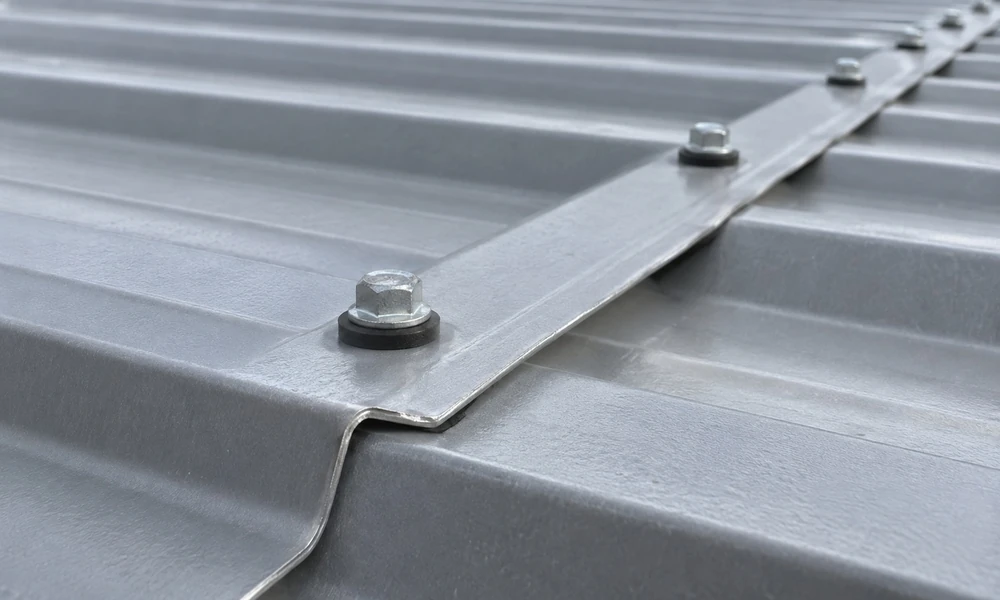
Where to screw metal roofing depends on which kind of system you have: exposed fasteners or concealed ones. With exposed-fastener panels, the screws go right through the panel into the deck or purlin, with a sealing washer under each head. Concealed-fastener and standing seam systems tuck their clips or screws under the seams, which leaves far fewer holes in the main field of the roof.
Exposed fasteners are common on corrugated and a lot of ribbed commercial panels. They go in quickly, and they’re simple to service. Their weak spots are the washer and the hole. Heat, UV, and screws driven too tight all wear those seals down, so any upkeep plan should include a fastener check.
Concealed systems usually cost more up front. They cut down on holes in the field, and when the clips are designed for it, they handle heat movement better. They still need careful flashing at the edges and openings, though. Hiding the field screws doesn’t get rid of every hole on the roof.
Neither one is automatically the right call. Slope, wind design, budget, timing, and how much maintenance staff you have should drive the decision about where to screw metal roofing on your building.
When the bids come in, ask each contractor to write the fastener type on the scope sheet. Owners sometimes find out later that a canopy was built with exposed fasteners when they were expecting concealed clips. A clear scope that spells out where to screw metal roofing heads prevents that surprise.
RoofElite installs both exposed-fastener and standing seam commercial metal systems. License CCC1335486. Call (833) 553-5483 or compare options with RoofElite.
