

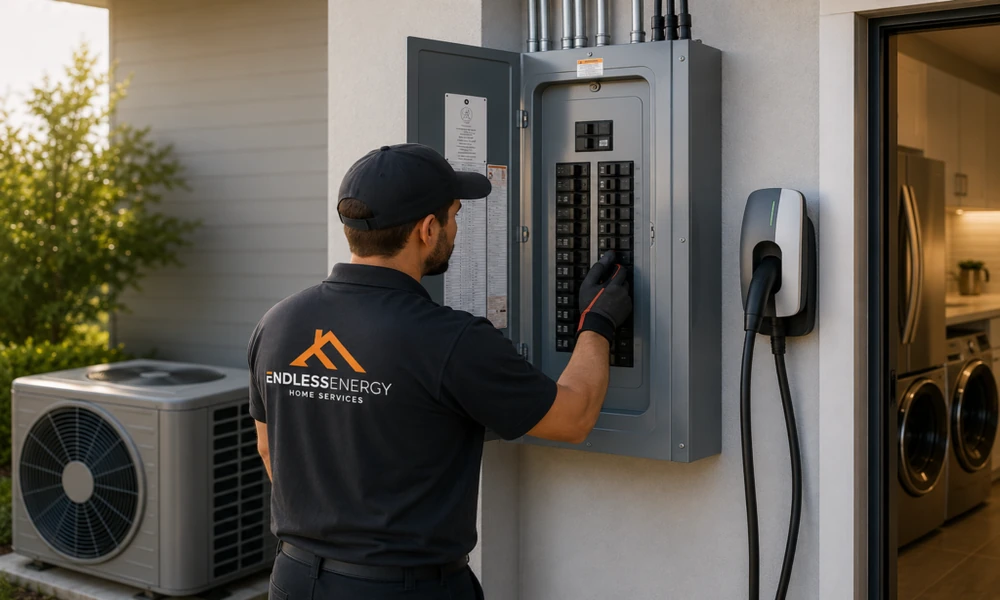
Picture a winter evening. The heat pump is running, someone starts the dryer, the induction cooktop is heating dinner and an electric car is plugged into the garage. Then a breaker trips and half the kitchen goes dark. Most people blame the appliance. Often the real limit is the gray metal box in the basement.
Every home has a fixed amount of electrical capacity, set mainly by the size of its service and panel. A house built decades ago might have 60 or 100 amps, which was plenty when the biggest loads were a refrigerator and a window air conditioner. Today’s homes ask for much more, and the gap between what the panel was built for and what the household actually uses keeps getting wider.
Homeowners who start planning a remodel or a new appliance often call an electrician in Wallingford or a nearby town first to find out whether the existing service can handle it. That question is worth asking before you buy any equipment, because the answer can change the budget, the schedule and sometimes the choice of appliance.
What “Capacity” Really Means
A panel’s amp rating is the total current it can safely deliver at once. Each breaker inside protects one circuit, and the main breaker protects the whole system. Breakers don’t just add up, though. A 100 amp panel can hold breakers whose ratings total well over 100, because not everything runs at full draw at the same time.
The problem starts when several large loads overlap for long stretches. Electric heat, water heating, cooking, drying and vehicle charging can each pull a big share of the available current. Run them together on a cold night and the main breaker, the service wires and the connections inside the panel all work close to their limits.
Heat is what wears a system down. Loose lugs, aging bus bars and undersized conductors get warmer under heavy load, and that heat builds up over the years. The Electrical Safety Foundation International lists breakers that keep tripping, lights that dim and discolored outlets as typical signs of an overloaded system, and recommends having older homes checked by a qualified electrician.
How a Load Calculation Settles the Question
Guessing from the number on the main breaker isn’t enough. Electricians use a load calculation, a method laid out in the National Electrical Code, to estimate how much the home will actually demand. In simplified form, it works like this:
- Count the general lighting and outlet load based on the home’s square footage.
- Add the fixed appliances, such as the range, dryer, water heater and dishwasher, at their nameplate ratings.
- Include heating and cooling, using whichever of the two is larger, since they rarely run at full output together.
- Add the planned equipment, like an EV charger, heat pump or hot tub.
- Apply the demand factors the code allows, which account for loads that won’t all peak together.
- Compare the result with the rating of the existing service.
There’s also another route. For existing homes, the code allows actual utility data to be used. A year of peak demand readings from the power company shows how hard the house really works its service. That data sometimes shows a 100 amp panel has more room than expected. Other times it confirms the house is already close to its limit.
Options Besides a Bigger Panel
A full service upgrade used to be the automatic answer. Today there are more choices, and the right one depends on the house.
The traditional path still makes sense when the panel is old, damaged or crowded. Moving from 100 to 200 amps usually means a new panel, new service conductors, a new meter base and coordination with the utility, which handles the connection on its side. That takes planning, a permit and an inspection, and the power is usually off for most of a day.
Load management is the newer option. Energy management systems and smart panels can watch total demand and pause lower priority loads, like the EV charger or water heater, when the house nears its limit. Recent code editions recognize these systems, so a properly installed controller can let an existing service handle new equipment without a larger connection.
Equipment choice matters as well. Heat pump water heaters, 120 volt heat pump dryers and EV chargers set to a lower current all reduce peak demand. Some induction ranges now include built-in batteries so they can plug into existing circuits. Choosing efficient models can be the difference between an upgrade and no upgrade.
Age Counts as Much as Size
Capacity is only part of the story. Some panels installed between the 1950s and 1980s come from brands that inspectors and insurers look at more closely, because of reports that their breakers may not trip when they should. Fuse boxes, panels with signs of rust or water, and panels where someone has doubled up wires under one breaker deserve a look no matter how many amps they’re rated for.
That’s why panel questions often come up during home sales. An inspector may note an older panel brand, missing breaker labels or scorch marks, and the buyer’s insurer may ask for an evaluation. Knowing the condition ahead of time keeps that from turning into a last minute negotiation.
Planning Ahead Pays Off
Most homes don’t change all at once. A heat pump replaces the oil furnace one year, an EV arrives two years later, and the kitchen remodel comes after that. Treating each project separately can lead to repeated panel work and wasted money.
A better approach is to look at the next five to ten years together. Listing the appliances you expect to add, getting a proper load calculation and choosing between an upgrade or load management early lets each project fit into a plan. The panel becomes something you planned for instead of something that trips the breaker on a cold evening.
